
Through his ascetic life Fr Avvakum left a permanent mark on the history of Slav monasticism on Mount Athos
May 12, 2021The region of Transcarpathia has produced many outstanding ascetics and confessors of Orthodoxy for the Church of Christ. One of these is the Transcarpathian Athonite elder Avvakum (Vakarov), a descendant of the ancient Transcarpathian line of the Vakarovs, some of whom were involved in the revival of Holy Orthodoxy in Transcarpathia in the 20th century.
Ivan and Ioakim Vakarov, distant relatives of Fr Avvakum’s, were co-founders of the first secret Orthodox community in Iza village and among the first parishioners of the same. In 1903, Ioakim Vakarov headed a delegation to Patriarch Georgi (Brankovich) of Serbia to ask him to receive their village from Uniatism into the Orthodox Church. In an attempt to thwart this intention, in 1904, the Austro-Hungarian police arrested Ioakim Vakarov and several of his fellow villagers. After serving a prison sentence, he died a martyr’s death at the hands of Hungarian gendarmes. Later, in 1913–1914, Venerable Alexis (Kabaliuk) and his close associates Vasilii and Stepan Vakarov were arrested in Iza.
Influenced by his relatives’ feat of confession, Andrei Vakarov, the future Elder Avvakum, likewise converted from Uniatism to Orthodoxy. At first, he became a novice and disciple of Venerable Alexis (Kabaliuk) in the first Orthodox monastery in Transcarpathia, which the latter founded together with Fr Matthew (Vakarov), and from there with the blessing of Saint Alexis he departed for the “spiritual school” of Saint Panteleimon Monastery on Mount Athos in 1916. This ancient Athonite monastery played an important role in the rebirth of Orthodoxy in Transcarpathia, and it is difficult to overstate the amount of help that it provided to the newly converted Orthodox Transcarpathians. Let it suffice to remind ourselves that Venerable Alexis (Kabaliuk) belonged to the brotherhood of this Athonite monastery and undertook his active missionary and educational work in Transcarpathia with the blessing of Athonite elders.
This Athonite blessing bore abundant fruit and sent up ample young shoots in the spiritually fertile soil of Transcarpathia. While there was not a single Orthodox parish in Transcarpathia under Austro-Hungarian rule, by 1939, just 15 years later, 127 new Orthodox churches had been built there and the Orthodox faithful numbered over 150,000.
A great many inhabitants of Transcarpathia responded to appeals from Saint Panteleimon Monastery and by the mid-1920s, there were over 30 Transcarpathian monks on Athos; it was their efforts that saved the monastery from utter destruction in the post-war years.
Elder Avvakum (Vakarov) lived a monastic life on Mount Athos for 46 years, from 1926 to 1972. It was there that he became a disciple and follower of Venerable Silouan of Athos, under whose direction he performed various difficult monastic obediences. Yet the most important thing he learned from his spiritual director was the art of the contemplative inner recitation of the Jesus Prayer, which opened up many spiritual gifts to him.
In the post-war era, when the ancient Monastery of Saint Panteleimon was undergoing the most difficult period of his history, Divine Providence ordained that Elder Avvakum should assume the obedience of serving as a member of the monastery’s Council of Elders, and as its steward and antiprosopos (representative) at the Holy Community of Mount Athos.
Through his ascetic life and self-sacrificing service, Fr Avvakum left a permanent mark on the history of Saint Panteleimon Monastery and of Slav monasticism on Mount Athos, and permanently sealed the contribution of the Transcarpathian elders to the spiritual treasure-house of the Holy Mountain.
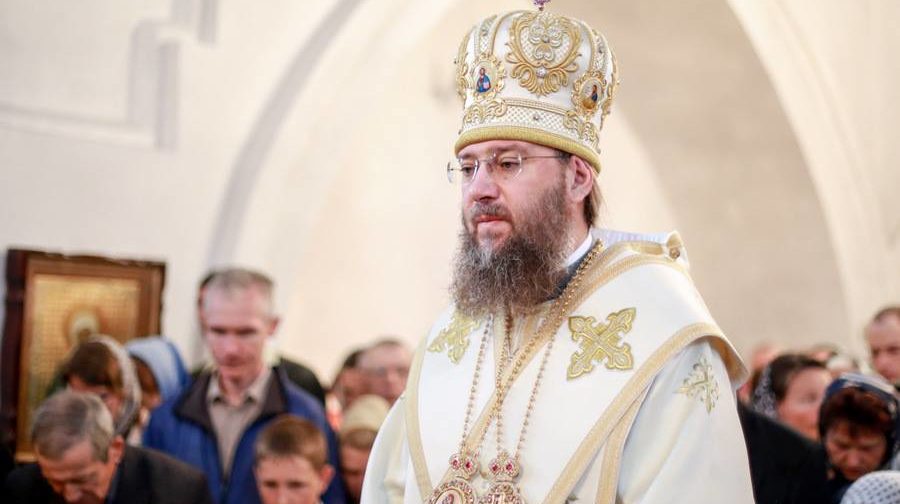
Foreword by Metropolitan Antony of Borispyl and Brovary, Chief Administrator of the Ukrainian Orthodox Church